KYON AIRCRAFT · IN PROCESS
The payload detonates on impact, and the aircraft does not come back.
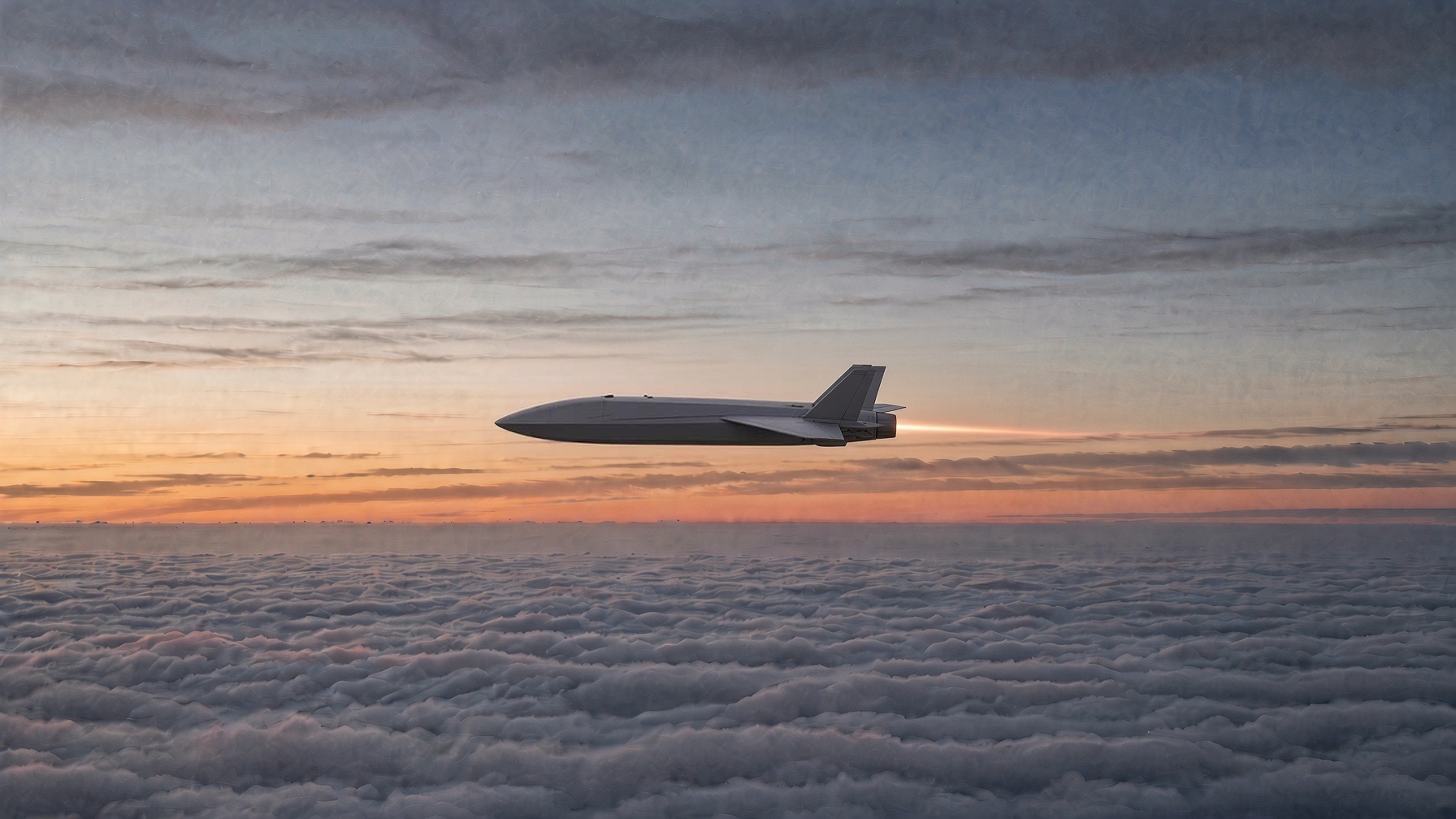
A one-way jet. The payload detonates on impact, and the aircraft does not come back. The body is slim and squared. Small triangular wings sit on a pivot, folded in the launcher until they lock open clear of the rail. Two canted tails, the same family as Meridian, pack in at the nozzle. It leaves a trailer, a launcher on a vehicle, or a fixed rail, then flies just above the terrain. Satellite guidance takes it to the locked target. A seeker stays with that target if the target moves. The crew on the launch vehicle, a station at the FOB, troops on the ground, or a remote station on a Starlink-class link can take the lock off and put it on a new one. Cut the throttle and the light airframe glides the same path when it needs to throw an enemy off. The body and the skin are shaped to scatter a radar return away from the receiver.
Public description of a Kyon Dynamics aircraft. It is not a fielding statement, a performance claim, or controlled technical data. Released dimensions stay with the build, not on this page. The drawing board below is the same article as the live picture: same gear, same tails, same nozzle, same wing.
LINE PLATE · PIKE · SIDE · PLAN · FRONT
IN PROCESS
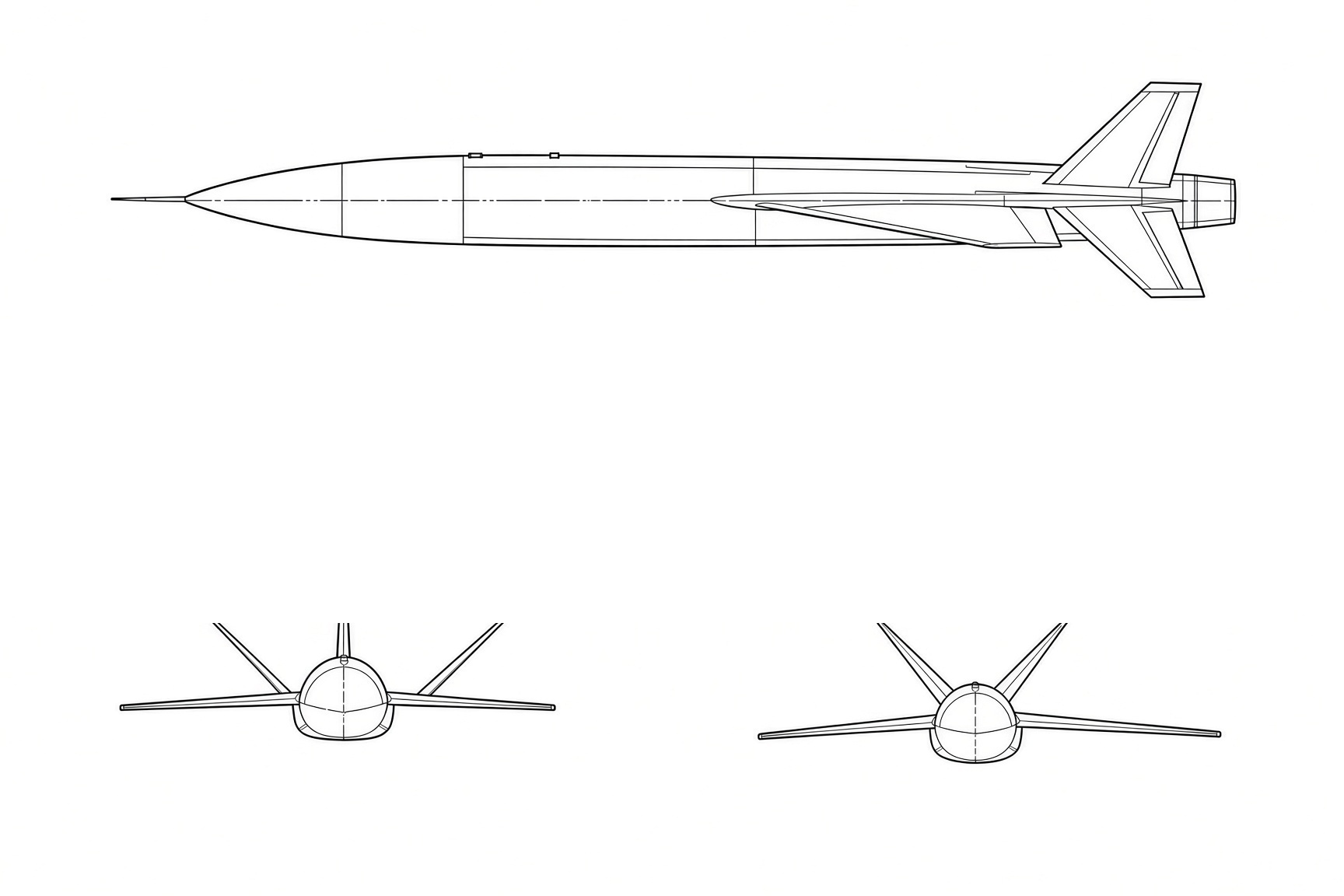
LINE PLATE · PIKE · SIDE · PLAN · FRONT
KYON DYNAMICS INC.
Pike
The payload detonates on impact, and the aircraft does not come back.
NTS · FOUR VIEWS · NOT RELEASED
Sheet
Side, plan, front, and a three-quarter, on one sheet. Same article as the live picture. Not a released drawing.
- Article
- One-way jet. The aircraft does not come back.
- Body
- Slim and squared. Shaped to scatter a radar return.
- Wings
- Small triangular wings on a pivot. Folded in the launcher, then locked open.
- Tail
- Two canted tails, the same family as Meridian, packed at the nozzle
- Launch
- Trailer, a launcher on a vehicle, or a fixed rail
- Path
- Just above the terrain. Throttle cut, the light airframe glides the same path.
- Guidance
- Satellite guidance to the locked target. Seeker stays with a moving target. Lock can be moved by the launch crew, an FOB station, troops, or a remote Starlink-class station.
- Build
- In process
D5 layers in this model
Structure
Squared body and the pivot the wings lock to.
Materials
Skin over the slim body. Triangular wings and two canted tails.
Systems
Seeker at the nose. Nozzle at the tail. Wings on the pivot.
Signature
Body and skin shaped to scatter a radar return away from the receiver.
How the article is being built
One floor. Six disciplines.
One floor. Six disciplines. Nothing is farmed out that the building can do itself. Paint and metalwork sit beside the six. They are not a seventh product line.
Design & Engineering
Surface models, inner structure, and the analysis that says a part is light enough and strong enough before anyone cuts a tool.
- CATIA V5 and SolidWorks
- Autodesk Alias, sketches, and renderings
- Finite element analysis
- Surfacing and tooling design
- Manufacturing feasibility
- 3D printed studies before the metal tool
Laser Scanning
A tracker on the part, not a guess in the model. Edges, spars, and tools get measured where they actually sit.
Reverse Engineering
Customer models arrive unfinished. The scan is closed into surfaces the floor can tool.
5-Axis Programming & Machining
Bulkheads, hard points, molds, and fixtures. Programmed on that floor, cut on that floor, in metals, plastics, composites, foam, and tooling board.
Composite Tooling
The mold is the part’s first assembly fixture. Soft tools, production molds, and tooling sets leave that floor, not a subcontractor’s.
Composite Parts
Wet layup and prepreg. Skins, spars, radomes, fuselage elements, and the repair when an article comes back.
Floor support, not a seventh line: Large downdraft paint booth, color match, and aerospace finishes. MIG, TIG, plasma, shear, slip roll, and brake. Large surface plates.